Building a successful music program in a small school requires a different mindset. The pool of potential participants is naturally limited, so you cannot rely on an endless supply of students or treat the music program as an island disconnected from the rest of the school. Although many of these ideas can apply to programs of any size, for the purposes of this article, I define a small school as one with fewer than 500 students in its entire student population. In a small school, every student matters, every relationship matters, and every opportunity to engage students in music matters.
I learned this firsthand during my 14 years of teaching at Loachapoka High School, a small, rural school just outside Auburn. With 220 students in grades 6-12, the band program had only 7 students when I arrived. During my time, about 25% of the students in the school participated in band. While there were many factors behind that growth, I believe three practices were especially important: becoming a genuine member of the school and community, taking musical opportunities outside the ensemble seriously, and valuing the musical interests of the students already in the program. These were not separate recruiting strategies or initiatives. They were connected parts of a larger philosophy about what it meant to be a music educator in a small school.
Be a Member of the School, Not Just the Music Teacher
One of my greatest strengths as a music educator in a small school was that I was not known only as the band director. I was also the varsity basketball coach, and I made it a point to attend students’ games, programs, ceremonies, and other school functions. I tried to be present in the life of the school beyond the band room because, in a small school, people notice presence. Students notice when you attend their basketball game or support something they care about. Parents notice when you show up for an event unrelated to your program. Colleagues notice when you participate in the life of the school rather than remaining isolated within your own area.
Over time, people begin to see you not simply as the person responsible for the music program but as a member of the school and the larger community. When that happens, they often begin to see your program differently as well. The music program becomes less an isolated activity for “the band kids” and more a visible part of school culture.
That connection is especially important in a small rural school because the same students often occupy multiple spaces. Your trumpet player may also be the starting point guard. Your percussionist may be involved in student government. Your drum major may play softball, participate in another club, and have siblings throughout the school. The boundaries between athletics, academics, the arts, and extracurricular activities are often much less rigid than they appear on paper. Because of that, the relationships we build outside our classrooms can directly affect what happens inside them.
We often want people to attend our concerts, support our fundraisers, encourage students to join our ensembles, and advocate for our programs, but support is relational. If we want the school community to value what happens in our spaces, we also have to demonstrate that we value what happens in theirs. You do not have to coach varsity basketball to accomplish this. The larger point is to become part of the school’s life. Attend the game. Show up at the play. Congratulate the student who won the science fair. Learn the names of students who are not in your program.
In a small school, recruiting often begins long before a student ever holds an instrument. It begins with relationships and with students seeing the music teacher as someone who is invested in the entire school community. That same idea carries over into the classes we teach outside our primary ensembles, where our view of those students can shape their view of our program.
Take Music Outside the Ensemble Seriously
That same commitment to the larger school community should extend to the classes we teach outside our primary ensembles. Over the years, I have had many conversations with music educators who describe their non-ensemble teaching assignments with phrases such as “The administration stuck these students in my class” or “I have to teach a non-band period.”
My response is simple: You do not have to teach this course; you get to teach this course.
That shift in perspective matters. Music should exist outside of our traditional performance ensembles, and the students who do not choose band, choir, or orchestra are no less deserving of meaningful musical experiences. In a small school, where every student represents a significant part of the school community, these classes should not be treated as an inconvenience or as something to get through before returning to the “real” work of the ensemble. They are part of the real work of being a music educator. That same commitment to value students beyond the ensemble also shapes how we respond to the interests of the students already in the room.
Many music educators in small schools are required to teach classes beyond band, choir, or orchestra. Depending on the school, that may mean general music, music appreciation, music technology, piano, guitar, or another elective created because of scheduling needs. It can be easy to view those classes as secondary to the “real” work of the music program, particularly when our professional identities are closely connected to the success of our performing ensembles. I came to see those classes differently.
Some of the greatest opportunities to build my program existed outside of my traditional ensembles, and one of my most effective recruiting tools was my general music class. I intentionally asked to teach general music every year because I wanted opportunities to teach students who had not already chosen band. For my first several years, I taught every tenth grader in the school. Later, when the school changed its arts requirement, I taught every seventh grader in music while my beginning band started in sixth grade. As a result, I regularly had access to students who might never have voluntarily walked into the band room.
That access was invaluable, but the purpose of those classes was not simply to turn every student into a band member. I took those classes seriously as music classes because students deserved meaningful music education, whether or not they ever joined one of my ensembles. General music should not become a semester-long recruiting commercial for the band program. Its value is greater than that.
At the same time, something powerful happens when students have a positive musical experience: some of them want more. A student who never imagined joining the band may discover an interest in rhythm. Another may become curious about keyboards, songwriting, music technology, or recording music. Another may simply develop a relationship with the music teacher and begin to see the music room as a place where they belong. Those interests can create natural pathways into the broader music program, but they begin with respecting the class and its students. When students encounter meaningful musical experiences and begin to see themselves as capable of making music, some will naturally want to explore additional musical opportunities the program offers.
This is why small-school music educators should think carefully about how they view scheduling assignments outside their ensembles. What may initially appear to be an additional class or an inconvenience can become one of the most important points of connection between the music program and the larger student body. In a small school, you cannot afford to ignore students who are not already in your ensemble; more importantly, music education should not ignore them either.
Music is bigger than our performance ensembles. The student who does not want to march may still want to produce beats. The student who does not want to play in the concert band may want to learn piano or guitar. The student who has no interest in performing may want to write songs, record music, understand how music is created, or explore other musical interests. When we take non-ensemble classes seriously, we expand the ways students can encounter music. Sometimes those students eventually find their way into our ensembles, and sometimes they do not. Either way, they have had an opportunity to experience music education, and that should matter. That is why the next step is to value the musical interests that students already bring.
Value the Musical Interests of the Students Already in the Room
Expanding access to music is important, but recruiting students is only one part of building a program. Once students arrive, we have to give them reasons to stay. One of the biggest turning points in my career came when I began taking my students’ musical interests more seriously. Students started arranging music, we performed more of the music they cared about, and I began questioning the traditional high school band calendar that often dictates the entire musical experience: marching band, winter concert, Music Performance Assessment, solo and ensemble, and spring concert.
There is nothing inherently wrong with any of those experiences, and we participated in many of them. The problem occurs when the calendar becomes the curriculum, and tradition becomes the primary reason we do something. Over time, my program began to deviate significantly from that model because I realized that if I wanted students to see the program as theirs, there had to be room for their musical interests.
One example was what we called the Red Day, White Day Project(Colquhoun, 2021). Our school operated on a rotating schedule. On Red Days, students engaged with traditional band literature. On White Days, students were given greater freedom to choose their own musical adventure. Some students explored piano, while others learned guitar. Some experimented with music technology, and others learned to write or arrange music.
The goal was not for every student to do the same thing at the same time. The goal was to create space within the program for students to explore what interested them musically. That experience fundamentally changed the way my program functioned because I stopped seeing student interests as distractions from the curriculum and began seeing them as potential curriculum.
This did not mean abandoning standards, musical growth, or ensemble excellence. Instead, it meant recognizing that students could develop musicianship through multiple pathways. A student arranging a song was making musical decisions. A student learning piano was developing harmonic understanding. A student working with music technology was listening, creating, editing, and evaluating. A student exploring the guitar was developing another means of musical expression.
As our definition of musicianship broadened, the program itself did as well. Students were no longer simply entering a program whose traditions and expectations had already been completely determined for them. They were contributing to the program’s musical culture. When students were allowed to contribute arrangements, suggest repertoire, and pursue musical interests, the program became something they helped create rather than something they simply joined.
The three practices that helped me build my program were ultimately connected. Being present throughout the school helped me build relationships with students before they ever entered the music room. Taking non-ensemble classes seriously gave me opportunities to teach students who might never have chosen a traditional ensemble. Valuing students’ interests within the program gave them more reasons to stay connected to music upon arrival.
One practice led naturally to the next. The goal was not simply to recruit more students into the same program. It was to build a music program that was connected enough to the school, broad enough in its offerings, and flexible enough in its practices that more students could find a place within it.
Small Schools Require a Big View of Music
Building a big program in a small school is not simply about increasing enrollment. A program can have impressive numbers and still serve a narrow range of students. The deeper goal is to build a music culture that is visible, connected, flexible, and meaningful within the school community.
For me, that required seeing myself as a member of the entire school community rather than simply the director of one program. It required recognizing non-ensemble classes as legitimate and valuable spaces for music learning. It also required creating room inside my program for students’ musical interests to shape what we did. Those practices helped grow the band, but the larger lesson extends beyond recruitment. The strongest recruiting strategy may simply be building a music program that students want to be part of.
In a small school, the music educator may have access to nearly every student in the building at some point. That is not a limitation; it is an extraordinary opportunity. The student in your general music class may become your next percussionist. The basketball player you coach may become your next section leader. The student arranging music on a laptop may change the direction of your entire program. But we have to see those students and the musical possibilities they bring before we can build opportunities around them.
Small schools may have fewer students, fewer resources, and fewer scheduling options, but they also offer something powerful: the opportunity to build deep relationships across the entire school community. When music educators embrace that reality, take every musical space seriously, and allow students’ interests to influence the program, a small school does not have to mean a small music program.
Sometimes, the key to building a big program is developing a bigger vision of who belongs in music, where music learning can happen, and what a school music program can become.
References
Colquhoun, S.E. (2021). Red Day/ White Day Project. In Holley, S., Reinhert, K., & Moir, Z. (ed.) Action-Based Approaches in Popular Music Education.
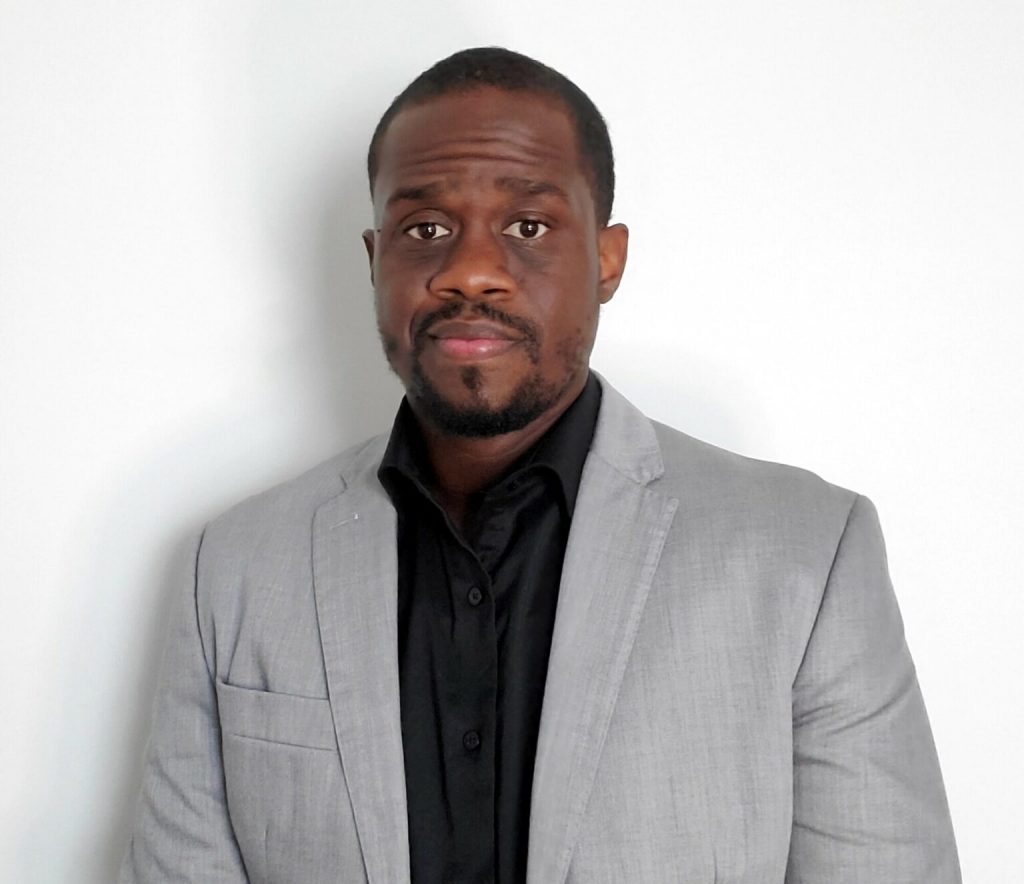
Dr. Shane Colquhoun is Assistant Professor of Music Technology and Contemporary Musical Styles at Alabama State University. A former secondary band director, he is a nationally recognized advocate for expanding access to music education through popular music, music technology, and student-centered learning. His research focuses on non-traditional music courses and ensembles, culturally relevant pedagogy, and preparing future music educators to serve a broader range of students. Dr. Colquhoun has published in multiple music education journals, serves on the editorial board of the Journal of Music, Technology & Education, and frequently presents at state, national, and international conferences on innovative music education practices.