Michael E. Ritzel

In many small and rural middle and high schools, the performing arts department might very well be a department of one. A school can have a great band, a great choir, or both but probably no theater teacher, no stagecraft class, and no established production staff. Yet students often want the chance to act, sing, dance, build, design and work backstage. A musical can be a common ground for all of those interests, and also expand the school’s arts offerings beyond the traditional ensemble model.
It can seem scary to begin a brand new, comprehensive program. Popular theatre-handbook author Larry Mitchell (1992) described the task as a “mountain of details” that can be made manageable when divided into smaller responsibilities, based on his decades of experience producing musicals in secondary schools and less than optimal facilities. That’s still very good advice. A new musical theater program doesn’t have to get started with a big production or a fully equipped auditorium. It needs a realistic first project, administrative support, a workable budget, and a cadre of adults and students who are willing to build something together.
Why Add Musical Theatre?
Band and choir are already powerful musical communities for our students, and musical theater can open the door even wider for participation in school arts. A musical needs singers and instrumentalists, to be sure, but it also needs actors, dancers, stage managers, builders, painters, designers, technicians, costumers, publicists, and organized students who would rather run a props table than stand under a spotlight. In a small school, that wide breadth of options can draw students into the arts who might never take a traditional ensemble.
The educational value for adding an extracurricular musical theatre program goes beyond performance skills. In a case study of a public high school musicals, John (2014) found that participation created a community of practice that fostered positive social and personal development for students. Similar observations have been reported in earlier practitioner literature. Ross and Durgin (1983) found benefits for young people in musical productions including higher confidence, group cooperation, improved time management and closer parent-child collaboration. Similarly, Malcolm John’s (1971) collection of school music-drama projects demonstrated the importance of allowing music, movement, language and design to interact rather than remain as isolated school subjects.
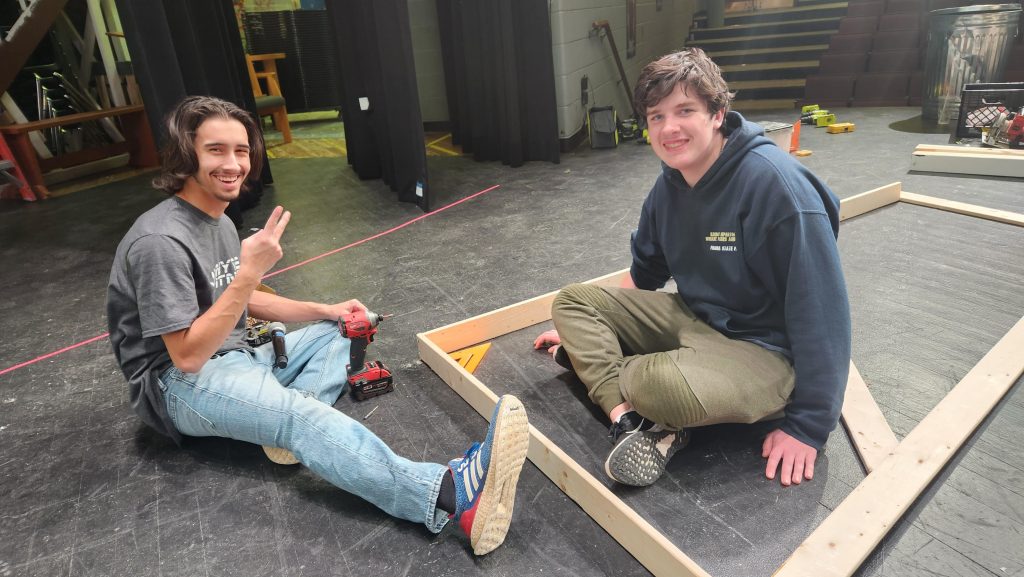
For a rural community, the public facing entertainment value can be just as important. A school musical is one of the few local events that brings students, families, teachers, businesses, and community members together to work on a common artistic project. One rural case described in Music Drama in Schools indicated that, in the absence of professional theater, amateur dramatic performances helped keep theater alive in remote, countryside districts (John, 1971). Current rural arts research also points to collaboration and regional networks as important tools for increasing access to arts education (LaGarry & Richard, 2018). In a recent account of the Educational Theatre Foundation’s JumpStart Theatre program, one rural partner reported that a cast of only 20 students drew about 400 community members, many of whom were seeing live theatre for the first time (Triana, 2025). A production can therefore serve two purposes at once. It gives students another arts-learning pathway, and it gives the community a reason to gather around the school.
Take a Plan to Your Administrator
Administrative approval should come before auditions, licensing commitments, or fundraising. A principal is more likely to support a proposal that already addresses the questions an administrator will eventually have to ask.
A one-page proposal should answer six questions:
- Why does the program benefit students and the school?
- Who can participate, including performance and technical students?
- Who will supervise and lead the production?
- When and where will rehearsals and performances occur?
- What will the program cost, and where will the money come from?
- How will success be evaluated after the first year?
Include a preliminary calendar and simple budget. A quick web search of either asset in connection with the keywords ‘school musical theatre program’ will return dozens of results to help get you started. Identify foreseeable needs such as building access, custodial coverage, transportation, background-check requirements for volunteers, ticket accounting, and facility use. Ask your administrator which district or board policies govern extracurricular programs before money is spent. For the pilot year, evaluation can be simple: record student participation, retention through the production, audience attendance, revenue and expenses, volunteer involvement, and brief student or family feedback.
This kind of institutional support matters. The Educational Theatre Foundation’s JumpStart Theatre program, which helps under-resourced schools establish sustainable theatre programs, begins by securing commitment from school leaders. Its partners identify administrative support, continuing mentorship, resources, and a multiyear plan as important ingredients in program sustainability (Triana, 2025).
Start With a Pilot
For a new program, the first goal should be a successful and repeatable experience. Resist the urge to prove the program’s worth by choosing the biggest show your students can imagine. Mitchell (1992) recommends matching the production to the cast, accompaniment resources, facilities, technical demands, available staff, and experience of the directing team. His advice is especially applicable for schools working in cafetoriums, gymnasiums, shared auditoriums, or spaces with little theatrical equipment. In short, do a simple show well, then expand as the program gains experience.
A middle school might begin with a licensed young performer adaptation, while a high school could choose a modestly scaled full length title with flexible scenery and manageable orchestration. If your high school talent pool of students is limited, fear not, the licensing rights for many junior musicals, young performer editions, and teen editions of well-known musicals allow performers to be as old as 18 at the time of performance. These styles of shows also typically come packaged with everything included: director’s script, score, actors’ scripts, and rehearsal and accompaniment tracks, making these titles a great choice for fledgling programs.
Before announcing anything, verify performance rights, identify a performance space, and place rehearsals and performances on the school calendar. In small communities, athletics, FFA, debate and forensics, church activities, transportation schedules, and other school events might involve many of the same students. Planning well in advance is essential. Mitchell (1992) similarly advises secondary-school producers to arrange rehearsal spaces and performance dates early because athletic activities, the weather, and other school events can quickly disrupt a production calendar. Think of the first production as a pilot year. One show is enough. The purpose is to learn what your students, staff, facility, and community can sustain.
Build Two Budgets: The Program and the Show
A new director often thinks first about costumes and scenery. Start farther upstream. Mitchell (1992) identifies licensing and materials, scenery, and costumes among major production expenses, along with such costs as props, publicity, programs, technical needs, and adult stipend payments. Those categories are still relevant today, although current prices and production practices have changed considerably since the time of Mitchell’s publication.
Create two related budgets. The production budget covers this year’s show: performance rights and materials, costumes, scenery, props, accompaniment, technical rentals, printing, and a contingency. The program budget, however, looks beyond opening night and includes durable investments such as storage, tools, sound and lighting equipment, professional development, and staff compensation. It is good to dream big: what could your program look like in a decade if you take baby steps each year to invest in one more program asset here and there?
Current national data suggest that school theatre frequently operates with limited institutional funding. In the Educational Theatre Association’s 2024 survey of more than 1,800 educators, more than half reported annual theatre budgets below $4,000, and 39% reported receiving no district funding. Ticket sales, donations, and fundraising therefore play substantial roles in many programs, and should in startup programs as well (Educational Theatre Association, 2024).
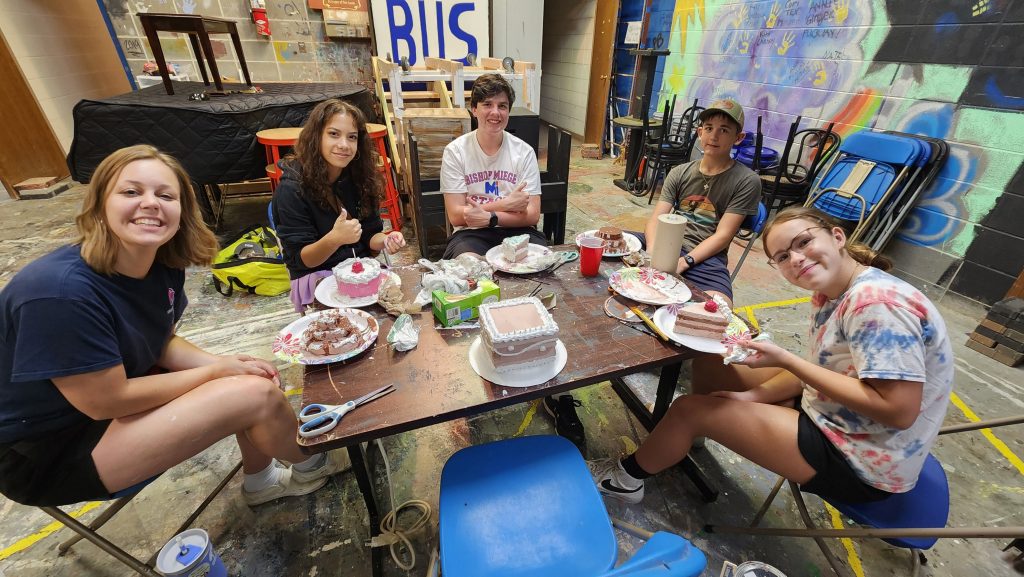
Those figures make a strong case for realistic planning rather than assuming the first musical will pay for itself. Ask for seed money from the school or district first. A modest first-year allocation demonstrates institutional ownership and can cover expenses that must be paid before tickets are ever sold. Depending on local structures, a school board can establish or approve a program allocation, while a PTA, PTO, music booster organization, or education foundation might be willing to underwrite a clearly defined startup expense. Local businesses can contribute sponsorships or in-kind materials, and community foundations may offer small arts or youth-development grants. Ticket income can help sustain future productions where district accounting policies permit it.
Parent and community help can stretch a budget considerably as well. Ross and Durgin (1983) used volunteer surveys to identify people with experience in scenery, sewing, music, transportation, carpentry, photography, and backstage supervision. That idea still works in many programs across the nation even today. Ask families what they know how to do rather than simply asking, “Who can volunteer?” At the same time, build the program so a student’s participation never depends on a family’s ability to purchase a costume, pay a large fee, or contribute skilled labor.
Ask About an Extra-Duty Contract
The labor required to direct and produce a musical should appear in the proposal as clearly as lumber or licensing fees. Rehearsals, production meetings, weekend set-build calls, technical rehearsals, performances, and financial oversight can add hundreds of hours outside the normal teaching day.
Kansas law specifically authorizes school boards to enter into supplemental contracts with district employees for duties outside their primary contracts, including “directing and assisting extra curricular activities” (Kan. Stat. Ann. § 72-2217, 2026). The statute authorizes such contracts, but it does not require every district to offer a musical-theatre stipend. Still, it gives Kansas educators a concrete basis for asking whether musical direction should be included on the district’s extra-duty schedule. Make that conversation part of the program proposal rather than waiting until rehearsals have begun. If resources allow, consider proposing separate compensation for major adult responsibilities such as stage direction, music direction, choreography, or technical supervision. A sustainable program should account for educator labor from the beginning.
Build a Team From the Assets You Already Have
A school without a theatre department still has personnel with applicable theatrical skills. Mitchell (1992) outlines a large production organization that includes artistic direction, music, choreography, costumes, properties, technical production, stage management, business management, publicity, box office, and front-of-house responsibilities. He also notes that smaller programs can combine positions and assign appropriate responsibilities to capable students and community adults.
Look across the school. An art teacher might advise scenic design. A shop or agriculture teacher may help with construction. A family and consumer sciences teacher knows sewing. A business class would probably jump at the opportunity to help with marketing. Students themselves can become stage managers, technicians, props leaders, and crew chiefs. The goal in year one is to identify the expertise already present and connect it to a clear job.
Community partnerships are also especially valuable in rural settings. Bowen and Kisida (2017) describe school-community arts partnerships as a way to leverage artists, cultural organizations, philanthropy, and other resources that schools cannot always maintain internally. Rural arts collaboration can also expand professional networks and connect schools with cultural resources beyond their immediate buildings (LaGarry & Richard, 2018). A nearby community theatre, college, arts council, dance studio, retired educator, church musician, or local tradesperson can become part of the program’s support network.
When After-School Theatre Does Not Fit
Sometimes a school wants musical theatre but cannot absorb another extracurricular activity. Staffing limits, late buses, athletic schedules, facility access, or budget restrictions might make an after-school school program impractical. In that case, consider whether the program can live in the community while maintaining a partnership with the school.
Kansas law provides a helpful alternative work-around for this possibility. Cities and school districts can establish recreation systems independently or jointly, and participating entities may cooperate in providing facilities for recreation programs (Kan. Stat. Ann. § 12-1924, 2026). Kansas recreation commissions also have authority to conduct programs on public or approved private property, receive donations and grants, enter contracts, and employ staff (Kan. Stat. Ann. § 12-1928, 2026). Local structures vary, so these statutes are a starting point for conversation rather than a guarantee that a particular agency can adopt and help start a theatre program.
A municipal recreation commission, city parks and recreation department, or county recreation agency where local structure allows are probably able to handle registration, budgeting, insurance, marketing, and seasonal staffing while partnering with the school for facilities or instructional expertise. A written agreement should clarify which entity contracts for performance rights, handles revenue, carries insurance, supervises minors, owns equipment, and controls the rehearsal and performance facility. Kansas already has examples of theatre operating comfortably within recreation structures. The City of Leavenworth’s Parks and Recreation Department manages a performing arts center that hosts community musicals and youth productions, while Johnson County Park and Recreation District operates Theatre in the Park and year-round youth theatre programming. The larger principle is easily understood and transferable to many communities. If one institution cannot carry the whole program, build a partnership. Community-based arts partnerships can pool resources and widen access while keeping the educational purpose at the center (Bowen & Kisida, 2017).
Begin With One Curtain
Don’t stress about having a perfectly planned and outfitted program and facility before launching your initiative. A new musical theatre program does not need a ten-year plan before its first audition. It does need enough structure to survive its first closing night. Choose a manageable show. Secure administrative support. Build an honest budget. Ask for compensation for the adults doing substantial extra-duty work. Recruit collaborators according to their skills. Give students meaningful jobs onstage and backstage. Document what you learn, then use that knowledge to make the second year easier than your first.
For a small or rural school, the first musical can feel like a leap into unfamiliar territory. It can also become a new point of connection among music students, students who have never found a place in an ensemble, faculty, families, and the wider community. Start small enough to succeed, and build carefully enough that when the final curtain falls, everyone is already asking what the school will do next year.
References
Bowen, D. H., & Kisida, B. (2017). The art of partnerships: Community resources for arts education. Phi Delta Kappan, 98(7), 8-14. https://doi.org/10.1177/0031721717702624
Educational Theatre Association. (2024, November 22). Inside the 2024 State of Theatre Education Report. https://schooltheatre.org/inside-the-2024-state-of-theatre-education-report/
John, M. (Ed.). (1971). Music drama in schools. Cambridge University Press.
John, R. (2014). Part of it all: The high school musical as a community of practice. Visions of Research in Music Education, Volume 24, Article 2. https://digitalcommons.lib.uconn.edu/vrme/vol24/iss1/2
Kan. Stat. Ann. § 12-1924 (2026). https://www.ksrevisor.gov/statutes/chapters/ch12/012_019_0024.html
Kan. Stat. Ann. § 12-1928 (2026). https://www.ksrevisor.gov/statutes/chapters/ch12/012_019_0028.html
Kan. Stat. Ann. § 72-2217 (2026). https://ksrevisor.gov/statutes/chapters/ch72/072_022_0017.html
LaGarry, A. E., & Richard, B. (2018). Arts integration in rural Minnesota: A collaborative arts integration framework. Arts Education Policy Review, 119(3), 146-157. https://doi.org/10.1080/10632913.2016.1236306
Mitchell, L. (1992). A practical handbook for producing and directing the Broadway musical (3rd ed.). Heuer Publishing.
Ross, B. B., & Durgin, J. P. (1983). Junior Broadway: How to produce musicals with children 9 to 13. McFarland.
Triana, J. (2025, July 8). Inside ETF’s JumpStart Theatre program. Educational Theatre Foundation. https://foundation.schooltheatre.org/inside-etfs-jumpstart-theatre-program/
Author Note
Michael E. Ritzel is an elementary general music educator in the Blue Valley School District and serves as Technical Director and Director of Education for the Olathe Civic Theatre Association. He is currently pursuing a Doctor of Arts in Music with an emphasis in Music Education at William Carey University.
The author reports no conflicts of interest. No external funding was received in support of this article.
Correspondence concerning this article should be addressed to Michael E. Ritzel, 520 N. Curtis Street, Olathe, KS 66061. Email: emmetritzel@gmail.com